In Africa, foreign support may rob God of his role as sustainer

http://globalopps.org/tmbriefs/dennis.jpg

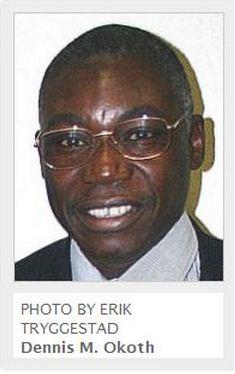
DENNIS M. OKOTH

Across my homeland, Kenya, orphanages are springing up on a regular basis. Unfortunately, many of these are started for no other motive than to eat out of the hands of the underprivileged.

It isn’t just orphanages. Some African Christians have launched Bible schools and academies that exist only for the trapping of foreign aid. Money meant to feed the poor and educate young Christians has become a salary for those who solicit the funds.

Does this mean that American Christians shouldn’t support missions in Africa? No, far from that. All labor that uplifts human dignity and importance should be undertaken with the painstaking excellence that it deserves.

My concern is for African Christians who rely completely on foreign donors for their livelihood. Doing so robs God of his role as a loving father who should be fully trusted to provide for all of our needs.

In my years of experience as an educator and counselor, I have come to see clearly that some of my well-meaning brothers and sisters of the faith view God as an instrument of manipulation to meet their daily needs — a cash cow of some sort. They see the Almighty as someone who must be impressed to milk out material gains under the guise of a Christian ministry or project.

Some of my countrymen have started their own business enterprises and tagged them as “Christian ministries” in order to draw foreign financial support. To them, keeping their wallets continuously lined with the dollar is a sure way of making ends meet.

Deserving, needy children in our societies have been used as bait to win foreign sympathy and support in order to earn a healthy living.

Loving the poor truly is inherent to following Jesus Christ. But I have seen the dignity of many African Christians destroyed when they become dependent on foreign support.

The benefactors who collect and coordinate this support often don’t know the consequences of their actions. It sometimes takes years for those who bite the bait to realize that they have been duped. If one tries to wake them up to this reality, they become reluctant to admit their folly. Doing so would require them to acknowledge their error to the supporters who contributed to the work with a sincere desire to help.

To break this vicious cycle, we must train our young and vibrant Christian soldiers that God can meet their needs through the skills he has generously endowed on all his children. We must teach them that hard work pays.

Tentmaking is a noble endeavor that honors God. It also sends a positive message to the younger generation that God blesses hard work.

The devil, who is the enemy of God and his children, would like us to see God differently. This prompts me to ask a question to people in Africa and America: Who is God to you? On a daily basis, we decide whether God’s leadership is better than ours, whether or not he is the source of our joy.

The strongest determiner of how much we enjoy life here on earth is hinged on how we perceive God. If we perceive that God has our best interests in mind, we will follow his leadership in every circumstance. We will leave our survival in his hands — not in the hands of a foreign financial donor.

I believe it is time we say “no” to financial arrangements that could be working against us — both the beneficiaries and the donors. We must stand up for what is right, even if we stand alone.

DENNIS M. OKOTH, a native of Kenya, is principal of Messiah Theological Institute in Mbale, Uganda, and works with a mission team of Americans and Africans. He will serve as a dean at LivingStone International University, a  church-supported university under construction in Mbale. Used with permission

Four Characteristics of High Performing Kingdom Companies

http://globalopps.org/tmbriefs/seeds.jpg

Twelve Kingdom Companies operating in the same country and culture were producing completely different results. While six were thriving, meeting or exceeding their financial and spiritual goals, six others struggled to survive financially and to show any spiritual impact. What was the difference? Were there common factors which could help other businesses identify best practices and be more effective. An in-depth look at these companies revealed some common themes.

Kingdom Companies that were producing positive ministry and business results tended to have four traits in common:

  • A blessing orientation
  • Openness regarding purpose and identity
  • Partnership with local churches and ministries
  • High cultural adaptation

Conversely, low performers had four contrasting  characteristics in common.

  • A converting orientation
  • Secrecy regarding purpose and identity
  • Independence, preferring not to partner with others
  • Low cultural adaptation

Let’s take each one separately.

Blessers vs. Converters

Businesses who expressed their purpose for existing as helping people in many aspects of their lives- financial, physical and spiritual – found their companies prospering more and also found more opportunities to see people come to Christ. They often described their mission as blessing those around them. While those who responded that their primary purpose was to evangelize, or convert, those around them, often struggled financially.

Ironically, those who focused solely on evangelizing, or making converts actually reported fewer converts than those who saw their role as blessing their workers and the community. They saw their business not as a means of improving the social environment around them, but merely an avenue to connect to others and convert them.

Openness in identity and relationships

Those who characterized themselves as blessers felt their faith was an important part of who they were and were open about it. Those who considered themselves converters felt their faith was viewed negatively and developed more covert strategies. They were selective in who they shared their faith with and as a result had fewer opportunities to share. The research showed that among the 12 companies, the ones who were open about their identity were significantly more effective in bringing people to Christ (by a ratio of 48 to 1).

Partnership with local groups

“Open” businesses were also more likely to build relationships with other organizations in their community. In the country involved that included local ministries because the country was open to traditional ministry activity. However, the “conversion” oriented businesses were more circumspect, fearing that close relationships could expose their “cover”. Therefore, they tended to work more independently.

It should be noted that this principle may be more difficult to adapt to “closed” countries that suppress organized Christian ministries. However, the principle may be extended to include relationships with community organizations that are not ministry motivated. Participation in local groups strengthens the identification with the community and offers multiple opportunities for interaction and faith sharing.

High vs low cultural adaptation

High cultural adaptation companies respected and worked within the values and practices of the culture as much as possible. This made it easier to build relationships with the national workers and establish rapport.

In this way nationals do not feel that they have to deny their culture and who they are in order to work in a Kingdom Company. Employee turnover is lower (improving the company performance) and long-term relationships provided much more opportunity to share and demonstrate the gospel to employees.

“Those who had fruitful and successful businesses had adapted in many aspects to the culture but had also intentionally worked to counter certain aspects of the culture.” This does not mean that they did not have to challenge some unbiblical aspects of the culture and seek to bring about transformation.

Many of the practices we follow out of habit are really just cultural and may not be suited to another culture. But in some cases there are practices that are ungodly. These have to be transformed. “Those managers who best reoriented their employees did so cautiously, consciously, and consistently.” There is not time in this article to go into how that is achieved. Suffice it to say, we are called to bring Kingdom values to bear in the workplace, but it must be done with wisdom and gentleness.

Not a business owner type tentmaker?

No problem. The same insights which were revealed while researching Kingdom Companies are applicable for the non-employer tentmaker who is an employee within a non-Kingdom Company. Global Opportunities’ experience walking along side hundreds of tentmakers is that these same principles can be adapted and work well for those who are employees in non-believing companies.

  • Take a wholistic approach. Realize all that you do should be a reflection of Christ in you, an example and hope to those around you in the place where God has put you. Your presence and actions should bring a piece of heaven into their life.
  • You do not have to hide your faith. People assume you are a Christian. 
    While not “getting in their face” about it, they need to know that you are approachable. Ruth Siemens would say to discreetly reveal, “I know about God and I am willing to talk.” Then wait for them to come to you with the questions.
  • Participate in community activities. Show your interest and contribute to the common good. Affirm what is wholesome in the culture and help to heal the wounds caused by sin.
  • Adapt. Be flexible. Learn the culture, including the language.

The woman who devoted her life to promoting tentmaking and then became one.

http://globalopps.org/tmbriefs/Berit.jpg

Steinar Opheim

In most of the world people think of tentmaking when they hear her name. Now at retirement age, she has finally become a tentmaker herself. She is definitely unique, but also a part of a new tentmaking and mission trend.

– Your life is not over when you become a retiree. You’ve just entered a new stage, says Berit Helgoy Kloster from Stavanger in Norway. For several years she has been a Spanish teacher at a high school in her hometown. Now she is teaching about Jesus in Spanish to students in the Dominican Republic. In addition she is speaking at seminars and courses on tentmaking all over the Hispanic World.

– I am the same age as the grandparents of the students I work among. In several ways I see that as an advantage. The students use me as a consultant and mentor. They have many questions they want to find the answers to. I am leading some Bible study groups and in addition I am available for those who want to talk, says the Norwegian lady who is called «Mama Norway» among the students.

– We are often talking about faith, and several times the conversations spontaneously lead to prayer and worship. I am amazed that I am allowed to be a part of this ministry, she continues.

Tentmaking addiction

Berit Helgoy Kloster’s love for tentmaking (some would even describe it as an addiction) has roots 40 years back. As a missionary in Ecuador she was supposed to start work among students in the city of Guayaquil. But as an outsider she felt it was difficult to get good contact with the students. As a part of her work she attended a conference where the founder of Global Opportunities, Ruth Siemens, was one of the speakers.  The American lady gave a wonderful introduction to tentmaking.

– I realized how much easier it would have been to reach the students if I had been a student myself, comments Berit.

Since then she has been a tentmaking promoter herself. She also became the international director of Tentmakers International (previously called Tentmakers International Exchange). Currently she is the senior associate on tentmaking in the Lausanne Movement. The affection for tentmaking has brought her all over the world and her family, friends and former colleagues often see her as the incarnation of John 3:8 where Jesus is stating that “the wind blows wherever it pleases. You hear its sound, but you cannot tell where it comes from or where it is going. So it is with everyone born of the Spirit.”

Growing trend http://globalopps.org/tmbriefs/mal.jpg

The grand old Norwegian lady is not the only retiree who moves abroad to serve God. Nelson Malwitz, the founder of the Finishers Project, says that many people are going into mission service for the first time as they are getting to the end of their work career or when they have just become retirees.

– When we started Finishers Project at the end of the 1990’s it looked like only people in their 20s and 30s were accepted by the agencies. But the Great Commission is not saying that we should make disciples of all nations only if we are under the age of 35. Fortunately the situation has changed, he says.

Malwitz encourages more gray haired people to sign up for an overseas ministry where they can use their skills and work experience and at the same time build the kingdom of God.

– Several of the people we are in touch with tell us how taking such a step added new dimensions to their lives, says the Finishers founder.

Berit Helgoy Kloster absolutely agrees with that.  Right now she is on her way back to the Dominican Republic where she is planning to stay  for most of the spring semester. Unless, of course, someone invites her to speak somewhere else, like they have already done in Puerto Rico.

They brought the Gospel to most of the world.

http://globalopps.org/tmbriefs/pioneers.jpg

Steinar Opheim

If you haven’t done so already, you should absolutely plan to celebrate this month’s great mission anniversary.

Innovative, generous and fearless. These are three keywords that international mission leaders use when they are asked to describe the American mission movement.

A cold winter morning in February 1812 the brig named “Caravan” set sail from Salem just outside Boston. Onboard were Ann Hasseltine and Adoniram Judson. They had married just a few days before. Now they were on their way to India to share the gospel.  Little did they know that they were to become pioneers in a fast growing, American mission movement that would bring the good news about Jesus Christ to millions of people around the world.

One hundred years after the Judsons embarked on the Caravan, the US had become the greatest sending nation in the world, a position it has kept ever since. According to Operation World the US today has approximately 95,000 missionaries. India follows a few steps behind whereas South Korea is number three.

Pioneering spirit

– The immigrants who founded the US were pioneers. They were willing to take chances and to move into the unknown. This pioneering spirit is still alive in the US today, says one mission leader TMB. Asked him to explain why the US has become the number one nation in evangelical mission.

Missiology professor Tormod Engelsviken underlines that the US is a superpower in many arenas. Thus it is common for people to have global visions.

– In addition, a big share of the people living in the US have a Christian faith. This has meant a lot for the Christians all over the world. We can only imagine what the situation could have been if the world’s strongest superpower had had other ideological or religious roots, he comments.

The US´ leading role in the world mission has also brought some tensions and challenges. Leaders TMB have spoken to say that American missionaries some places have shown little cultural sensitivity. Money coming from the US has also caused unhealthy dependency in the mission work in some places.

High price

A great number of American missionaries have paid a high price for their calling to bring the gospel to new places. That was also the case for Ann Hasseltine and Adoniram Judson. They were not allowed to settle in India as they had planned. Instead they moved on to Burma. One of their three children died before birth. The other two passed away before they were one year old. After 13 years in Burma Ann Hasseltine Judson died of smallpox. Her husband was imprisoned for 17 months under harsh conditions during the Anglo-Burmese war from 1824-1826 because he was accused of being a spy. In spite of challenges and suffering he stayed on in his ministry until he died in 1850.

Because of their faith and willingness to sacrifice, the lives of Ann Hasseltine and Adoniram Judson have become models for other American missionaries.

– The future is as bright as the promises of God, stated Adoniram Judson when the couple arrived in Burma the first time and got a glimpse of all the Buddhist temples in the nation. Today Burma has 4,5 million Christians, and several Burmese churches have sent out tentmakers and missionaries to bring the gospel to new places.