In Africa, foreign support may rob God of his role as sustainer

http://globalopps.org/tmbriefs/dennis.jpg

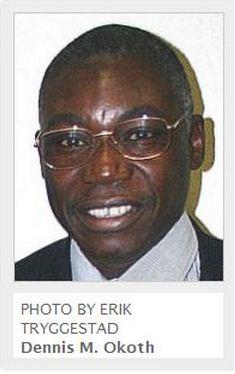
DENNIS M. OKOTH

Across my homeland, Kenya, orphanages are springing up on a regular basis. Unfortunately, many of these are started for no other motive than to eat out of the hands of the underprivileged.

It isn’t just orphanages. Some African Christians have launched Bible schools and academies that exist only for the trapping of foreign aid. Money meant to feed the poor and educate young Christians has become a salary for those who solicit the funds.

Does this mean that American Christians shouldn’t support missions in Africa? No, far from that. All labor that uplifts human dignity and importance should be undertaken with the painstaking excellence that it deserves.

My concern is for African Christians who rely completely on foreign donors for their livelihood. Doing so robs God of his role as a loving father who should be fully trusted to provide for all of our needs.

In my years of experience as an educator and counselor, I have come to see clearly that some of my well-meaning brothers and sisters of the faith view God as an instrument of manipulation to meet their daily needs — a cash cow of some sort. They see the Almighty as someone who must be impressed to milk out material gains under the guise of a Christian ministry or project.

Some of my countrymen have started their own business enterprises and tagged them as “Christian ministries” in order to draw foreign financial support. To them, keeping their wallets continuously lined with the dollar is a sure way of making ends meet.

Deserving, needy children in our societies have been used as bait to win foreign sympathy and support in order to earn a healthy living.

Loving the poor truly is inherent to following Jesus Christ. But I have seen the dignity of many African Christians destroyed when they become dependent on foreign support.

The benefactors who collect and coordinate this support often don’t know the consequences of their actions. It sometimes takes years for those who bite the bait to realize that they have been duped. If one tries to wake them up to this reality, they become reluctant to admit their folly. Doing so would require them to acknowledge their error to the supporters who contributed to the work with a sincere desire to help.

To break this vicious cycle, we must train our young and vibrant Christian soldiers that God can meet their needs through the skills he has generously endowed on all his children. We must teach them that hard work pays.

Tentmaking is a noble endeavor that honors God. It also sends a positive message to the younger generation that God blesses hard work.

The devil, who is the enemy of God and his children, would like us to see God differently. This prompts me to ask a question to people in Africa and America: Who is God to you? On a daily basis, we decide whether God’s leadership is better than ours, whether or not he is the source of our joy.

The strongest determiner of how much we enjoy life here on earth is hinged on how we perceive God. If we perceive that God has our best interests in mind, we will follow his leadership in every circumstance. We will leave our survival in his hands — not in the hands of a foreign financial donor.

I believe it is time we say “no” to financial arrangements that could be working against us — both the beneficiaries and the donors. We must stand up for what is right, even if we stand alone.

DENNIS M. OKOTH, a native of Kenya, is principal of Messiah Theological Institute in Mbale, Uganda, and works with a mission team of Americans and Africans. He will serve as a dean at LivingStone International University, a  church-supported university under construction in Mbale. Used with permission

Four Characteristics of High Performing Kingdom Companies

http://globalopps.org/tmbriefs/seeds.jpg

Twelve Kingdom Companies operating in the same country and culture were producing completely different results. While six were thriving, meeting or exceeding their financial and spiritual goals, six others struggled to survive financially and to show any spiritual impact. What was the difference? Were there common factors which could help other businesses identify best practices and be more effective. An in-depth look at these companies revealed some common themes.

Kingdom Companies that were producing positive ministry and business results tended to have four traits in common:

  • A blessing orientation
  • Openness regarding purpose and identity
  • Partnership with local churches and ministries
  • High cultural adaptation

Conversely, low performers had four contrasting  characteristics in common.

  • A converting orientation
  • Secrecy regarding purpose and identity
  • Independence, preferring not to partner with others
  • Low cultural adaptation

Let’s take each one separately.

Blessers vs. Converters

Businesses who expressed their purpose for existing as helping people in many aspects of their lives- financial, physical and spiritual – found their companies prospering more and also found more opportunities to see people come to Christ. They often described their mission as blessing those around them. While those who responded that their primary purpose was to evangelize, or convert, those around them, often struggled financially.

Ironically, those who focused solely on evangelizing, or making converts actually reported fewer converts than those who saw their role as blessing their workers and the community. They saw their business not as a means of improving the social environment around them, but merely an avenue to connect to others and convert them.

Openness in identity and relationships

Those who characterized themselves as blessers felt their faith was an important part of who they were and were open about it. Those who considered themselves converters felt their faith was viewed negatively and developed more covert strategies. They were selective in who they shared their faith with and as a result had fewer opportunities to share. The research showed that among the 12 companies, the ones who were open about their identity were significantly more effective in bringing people to Christ (by a ratio of 48 to 1).

Partnership with local groups

“Open” businesses were also more likely to build relationships with other organizations in their community. In the country involved that included local ministries because the country was open to traditional ministry activity. However, the “conversion” oriented businesses were more circumspect, fearing that close relationships could expose their “cover”. Therefore, they tended to work more independently.

It should be noted that this principle may be more difficult to adapt to “closed” countries that suppress organized Christian ministries. However, the principle may be extended to include relationships with community organizations that are not ministry motivated. Participation in local groups strengthens the identification with the community and offers multiple opportunities for interaction and faith sharing.

High vs low cultural adaptation

High cultural adaptation companies respected and worked within the values and practices of the culture as much as possible. This made it easier to build relationships with the national workers and establish rapport.

In this way nationals do not feel that they have to deny their culture and who they are in order to work in a Kingdom Company. Employee turnover is lower (improving the company performance) and long-term relationships provided much more opportunity to share and demonstrate the gospel to employees.

“Those who had fruitful and successful businesses had adapted in many aspects to the culture but had also intentionally worked to counter certain aspects of the culture.” This does not mean that they did not have to challenge some unbiblical aspects of the culture and seek to bring about transformation.

Many of the practices we follow out of habit are really just cultural and may not be suited to another culture. But in some cases there are practices that are ungodly. These have to be transformed. “Those managers who best reoriented their employees did so cautiously, consciously, and consistently.” There is not time in this article to go into how that is achieved. Suffice it to say, we are called to bring Kingdom values to bear in the workplace, but it must be done with wisdom and gentleness.

Not a business owner type tentmaker?

No problem. The same insights which were revealed while researching Kingdom Companies are applicable for the non-employer tentmaker who is an employee within a non-Kingdom Company. Global Opportunities’ experience walking along side hundreds of tentmakers is that these same principles can be adapted and work well for those who are employees in non-believing companies.

  • Take a wholistic approach. Realize all that you do should be a reflection of Christ in you, an example and hope to those around you in the place where God has put you. Your presence and actions should bring a piece of heaven into their life.
  • You do not have to hide your faith. People assume you are a Christian. 
    While not “getting in their face” about it, they need to know that you are approachable. Ruth Siemens would say to discreetly reveal, “I know about God and I am willing to talk.” Then wait for them to come to you with the questions.
  • Participate in community activities. Show your interest and contribute to the common good. Affirm what is wholesome in the culture and help to heal the wounds caused by sin.
  • Adapt. Be flexible. Learn the culture, including the language.

TOP Ways to Share Your Faith in the Workplace

http://globalopps.org/tmbriefs/man.jpg

Phill Sandahl

The essence of being a tentmaker is to live an integrated faith in all that you do, whether at work or play, so that others will see the work of the Father through you. This is true whether you are living in your birth culture, or as a guest in another culture. Living in another culture just adds another layer of complexity.

Interpersonal relationships are a big part of taking Christ to the nations. Holidays and celebration days are especially rich opportunities for building and extending those relationships. One might say it is peak “fishing season” for fishers of men. There are more opportunities for connecting and people seem to be in a more open and receptive mood.

Recently I came across some good lists of practical suggestions for how to share ones faith with neighbors and another one focused on the workplace. While there were a lot of useful ideas I quickly realized it was written by, and for, North Americans. Some will work, and some won’t, in multi-cultural settings. They are starting points to discover some of the best ways to engage people naturally in your specific workplace.

 These are my top 5 ways to engage cross culturally in the workplace:

 1. Share stories about your/their family traditions related to the holidays
 2. Share food from your/their cultural tradition
 3. Attend their parties – invite them to your
 4. Find out when there are special events in their lives (birthdays, etc) and seek
    to recognize and bless them
 5. Go out of your way to recognize the people who are often overlooked in the
     workplace. Learn the names of all the people in your workplace and pray for
     them.

Holidays offer increased opportunity to build relationships for those who are open to seeing them. It is “open Season” for fishers of men. It may not even be a holiday where you are, but a holiday of your host culture, which you are not accustomed to celebrating. Either way you win. There are twice as many opportunities in a multi-cultural setting.

 The Novena

An air of expectancy filled the neighborhood. The celebration of Quito’s Independence Day had passed and people were preparing for Christmas. Ecuador, having a long catholic tradition, has a celebration they call the Novena which takes place for the nine days leading up to Christmas. Each neighborhood wanted to do something together to recognize the season. Ours was no different.

Often Novenas just become pretexts for drunken partying completely missing the original purpose of preparing to celebrate the birth of Jesus. With Ecuadorian friends we set out to redeem the time. We gathered all the adults in the neighborhood together and made our proposal. Each night we would have a party for all the children in the neighborhood. All of the families would contribute food and help with games and activities including the launching of brightly colored hot-air balloons which sailed off into the night – a favorite of all Ecuadorians.

The Christmas story was told in 9 installments, one for each night, accompanied by singing and visiting. Everyone had a wonderful time.

It was so successful that when the next major vacation event came along – Carnival – the neighbors said they wanted to do something special for that occasion as well. In the end a bus was chartered and the whole community rented a retreat house on the beach where all the families hung out together for a whole week.

 Strangers Bearing Gifts

There was a knock at the door. Who could it be? Diane was not expecting visitors. When she opened the door she was shocked to see a whole family of Indians with an armload of wrapped gifts. She greeted the strangers and asked how she could help them. Perhaps they knocked at the wrong home. No they explained, they had come to the right place.

We are your neighbors from the next block over, and we have been curious to meet you and know why you have come to our country. Though Christmas is not practiced in our land we know that in your country it is a time of gift giving, so we have come to give you gifts and meet you.

This was the beginning of an unexpected opportunity to share about Christ with the people of India with whom they had come to work.

 Cookies in India

Baking and sharing cookies with the neighbors during the holidays was a family tradition in our home. So when my grandchildren moved to India, they continued the practice there. They found it took on a new cultural twist. You can’t just drop the cookies off and leave. You are always invited in to visit. First you have to explain what the strange practice is and why you are giving things to your neighbors. Of course, there is also the serving of tea and conversation. Each visit will last from one to two hours so you need to allow lots of time and several days to complete the project.

At this time of the year it is easy to get caught up in buying and giving gifts. Perhaps one should ask instead, “How can I bless the people in my life?” then instead of focusing on buying and giving one might find that the best way to bless is to give of your time and energy. This is the real spirit of the season. “For God so loved the world, …He gave His Son…” because He wanted a relationship with us.

Preparation for Today’s Mission Challenges

http://globalopps.org/tmbriefs/goe.png

Phill Sandahl
 

Mary was a successful professional pursuing her career. But there was a restlessness in her soul. There was a sense that God wanted her to be involved 
in overseas missions. What should she do? At a conference she heard about tentmaking, and that looked like it made more sense considering her skills and career. She felt like she needed some specialized training. She could not put her income on hold for a year or more to return to school. Besides, what would she take? She already had a degree in her profession.

The Lausanne group studying tentmaking/business as mission highlights the lack 
of training options as one of the obstacles to the development of the tentmaking movement.

One of the weak spots within the tentmaking movement over its recent history 
has been the question of training. People involved (in tentmaking/BAM) have generally been highly motivated, often well trained professionally and rarely in a position to undertake extended training comparable to that of career missionaries.
    Lausanne Occasional Paper #39

 The solution is training to supplement professional preparation that is:

•     Biblical
•     Focused
•     Practical and Actionable
•     Short duration
•     Foundational for further self-study

Mary found the solution in a 4 ½ -day intensive GO Equipped! course which prepared her to share her faith in the marketplace and live in a foreign culture.

She was able to take the course without interrupting her regular work and then begin the process of seeking placement overseas in the area to which God had called her. One year later she was living self-supported in a country that does 
not issue religious worker visas.  

She writes, “Thank you Global Opportunities for this invaluable course! I am now serving as a tentmaker in an unreached country. Truly, there is no other course out there that is specifically designed by and for tentmakers”  “Mary”

“God began to open my eyes to new areas of service to Him. GO Equipped prepares the Christian to fulfill the great commission not only on the foreign field, but right here at home.” Patricia