Just a Glass of Water

http://globalopps.org/tmbriefs/feet.png

Neetu was wandering through the break room looking troubled.

The boss approached and asked what was wrong.
”Nothing. I am thirsty and looking for a glass for some water, but they are all dirty” she replied. She left empty-handed. In India, a professional worker would rather go thirsty than lower herself to do the work of a lower level cleaning person.

After she left the boss washed the dishes in the break room and then got himself a glass of water. He got a second glass for Neetu and took it to her desk.

“What is this?”

“Weren’t you looking for a glass of water?,” he said.

“You shouldn’t do this,” she replied.

“Why not, it’s just a glass of water, and I knew you were thirsty.

The incident seemed to end there…

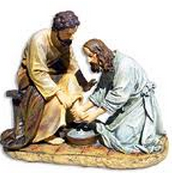
Days later, in a staff meeting she began weeping unexplainably. Concerned co-workers asked what the problem was.  “I get it!” she exclaimed. I understand the statue at the entrance to the office. The one of Jesus washing the disciple’s feet.  Neetu had known the story of Jesus washing the disciples’ feet, but she did not understand the power of the message until she experienced the reality of it herself in a tangible way.

In this Kingdom Company the Christian management determined to exemplify biblical principles in the way they ran the company. Core values were based on Bible truths – honesty, servanthood, stewardship, and community. To build the concepts into the company culture they regularly use Bible stories to illustrate the application of these values in the workplace. Artwork in the offices reinforced the teaching. A statuette similar to the one pictured above sat on the director’s desk. 

As events like this are observed and repeated a different business culture is being forged, and God breaks through to those who are touched.

For Reflection

Mark 9.41 I tell you the truth, anyone who gives you a cup of water in my name because you belong to Christ will certainly not lose his reward.

Col 3.17 And whatever you do, whether in word or deed, do it all in the name of the Lord Jesus, giving thanks to God the Father through him.

Ministry On and Off the Clock

http://globalopps.org/tmbriefs/phone.png

It’s 10:30 pm when the phone rings. The voice on the other end sounds frightened.

It’s Lindsay, the new neighbor, who moved in recently. We stopped by to introduce ourselves two months ago as the family was moving in and exchanged phone numbers. We have not had contact since. What’s going on? Lindsay explains she is home alone with her two pre-school children and she is scared. Her husband has not returned from work yet.

There are noises outside the house. It sounds like someone is trying to break in. “Could someone drive by the house and see if there is anyone outside?”

My wife and I come right over. We don’t see anyone outside the house. We call to tell her we are coming to the door so she will not panic. My wife goes in to reassure her while I walk around the house.

The intruder has gone. He left a tell-tale mess of spilled garbage. I’m not sure if it was a raccoon or a panther but there was no danger. Lindsay sighed in relief.

Fast forward to Sunday. I am reading the church bulletin. Inside I find a list of ministry needs and opportunities – Teach Sunday School, Lead Bible study, Help with VBS, Short term mission trip to Guatemala, etc.

I reflect. These are wonderful ministries. BUT wait! Something doesn’t seem right. Is this all there is to ministry? I get the impression that in order to be ministry, my effort has to be on the church calendar and part of a church program. What about helping a neighbor? Or, helping a student with his studies? Or, making sure my work is done in a God-honoring way? Where does that fit in?

If we only see ministry as something that we can schedule, or program, then we have a very incomplete picture.

The notion that things that happen in the church, or are part of a church program, are ministry and that the rest are not, is false. In part this is a result of the old Greek idea that some activities are sacred and others are secular. This needs to be challenged and corrected.

I believe there is another reason for this misconception. We only need to look at the stories we tell and the heroes we praise in church for the answer. Christians will practice the activities that are recognized and appreciated in the church. When was the last time someone was recognized for helping a neighbor, or conducting his business in a God-honoring way, unless it was part of a formal church program? Instead we have the VBS leaders and the Sunday School teachers recognized from the platform. We have a mission team do a presentation when they return from their trip. These are exciting to report and they should be reported. But if we only tell these kinds of stories we fail to show people that ministry can happen in the everyday pathways of life too.

The Church needs to tell the stories about how God uses everyday activities that come along as teaching moments to share faith in natural everyday settings. In that way she will be showing Christians how to take Christ into every corner of their lives – their homes, their communities and their workplace.

Ministry is a lifestyle choice, not a scheduling choice. It is about the relationships we create. It’s about  bringing God’s blessing to those he puts in our way.

Matt 5.16 In the same way, let your light shine before others, so that they may see your good works and give glory to your Father who is in heaven.

Hurrah! TM Briefs Completes Two Years 

Happy Anniversary frogs

Phill Sandahl

This month marks the second anniversary of the publication of Tentmaking Briefs. Thank you for your support. Over these 2 years we have seen circulation grow over 25%. It has been a slow but steady increase.

Our desire is to make TM Briefs a valuable service in your reflection on the difference tentmaking can make and what god might be calling you to do.

Many of you were not with us in the beginning or may have missed some of the issues along the way. For your convenience we are providing an index to all the past issues. We invite you to visit the archives and pick up something you may have missed.

Getting Your Life in Order

http://globalopps.org/tmbriefs/juggling.png

Phill Sandahl

A term often used in discussions of tentmakers troubles me. It is frequently used by those who are pastoring a church but also holding another job to make ends meet financially. That term is “bi-vocational”

The term may, or may not, be used correctly but that is not what bothers me. What disturbs me is that it reinforces the unbiblical concept of a secular-sacred divide. It gives a mistaken understanding of the biblical teaching on work and leads to a number of other problems.

Conversations about being bi-vocational often center around how hard the person has to work doing two jobs. Then there are problems of maintaining balance – whether in the use of time, the management of finances, or some other aspect of life.

This approach is not helpful. What is called for is some perspective. When there is a problem resolving a conflict of interests it is best to look for an overarching principle that addresses all of them.

Consider this:

• For the Apostle Paul tentmaking was not a Plan B when funds ran low, but rather, his preferred, intentional strategy (see Why Did Paul Make Tents). It is a legitimate model and in the early church the predominant one.

• Vocation – the term is related to the word for calling. When one says that he is bi-vocational he is saying that he has two distinct callings, and that they are in conflict. God may ask a person to do a number of different things in his life, but there is one calling.

• When there appears to be a conflict, either one or more options are wrong, or we are not looking at the problem correctly. In most cases there is, in fact, a greater overarching call which can properly align the subsidiary activities.

• All Christians are citizens of the Kingdom of God, and called to build his Kingdom.

• The church is God’s vehicle to transform all of society – Not the building. Not even the institution. But the people. (see companion article Travel Light).

• Life is frequently divided into different domains or sectors: family, leisure, professional, financial, etc. Each person participates in each of these domains and connects with other people within them. However, there is no separate domain for faith. Effective faith should permeate all the domains speaking across all of them.

• Each of us has received a unique personality, skills, gifting, and training to prepare us to do the will of the Father. Life, like the body, consists of many parts, all necessary and working together.

When we focus on the Kingdom of God we see that God calls each of us to contribute in different ways to building His Kingdom and taking back territory from the Enemy. 
To that end He uniquely equips us to transform all sectors of society, by living out our faith where He places us.

We need to change the image of life. It is not the juggling of multiple disparate activities. Rather it follows the dynamic model of an atom. It is a single entity consisting of multiple moving components interacting together to achieve one purpose – building the Kingdom.