New Resource Website for Tentmakers

http://globalopps.org/tmbriefs/t.jpg

The Norway-based resource center for tentmaking named Tent has recently launched its international website at tentinternational.org.

This is an important step in serving the worldwide tentmaking movement in a better way, comments Tent’s managing director Steinar Opheim.

Tent (the word “tent” in Norwegian means “on fire”) was founded in 2000 focusing on recruiting and training Norwegian students, business people and professionals for work overseas.  Over the years the work has become more and more international. The GO Equipped tentmaking course that Global Opportunities and Tent have developed together, is now run annually in several nations. People from Tent have also invested much time and work in serving the fast-growing African tentmaking movement operating under the leadership of Tiowa Diarra who is based in Bamako, Mali.

Tent’s international website will provide resources for current tentmakers and tentmakers to-be. There is also a news section that will give the readers updated info on what is going on in the worldwide tentmaking movement.

– The tentmaking training we provide can be applied everywhere. We will still aim at keeping a focus on the unreached people groups in our communication. It is amazing to experience how Christian professionals and business people are welcome everywhere, even to nations where the religious freedom is very limited. 

Thus we believe that tentmakers is a key group God will use in reaching the whole world with the Gospel, says Opheim.

Tentmaker Challenges Series II

http://globalopps.org/tmbriefs/instant.jpg

Thank you to everyone who responded to the first issue of Tentmaker Challenges Series last month. 

Here are some of your comments:

“we have been tentmakers for over a decade and can identify with all these challenges”

“Can’t wait for you to deal with our biggest challenge, which is also number one on your list – the expat trap”

“as hard as it may be to admit it, we do struggle with number 2 – materialism”

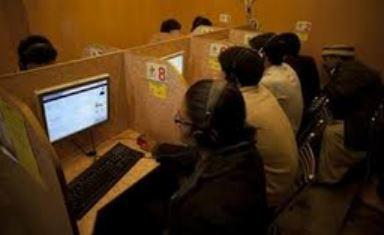
In this issue we will deal with number 6. Who would think instant communication channels would be a problem?

This does not mean you should shut down these communication channels totally, butyou should intentionally work on finding balance.

If there are children in your family, it is vital for them to connect with grandparents and relatives back home (or wherever they are). Staying connected with your home church and staff is equally important.

It is, however, alarming to learn that some couples returns home from their jobs, both of them go online immediately after dinner to chat with people back home – and stay online until bedtime.

This is worrisome on two levels.

One, they should be spending quality time as a couple to make room for their relationship to grow, and to focus on the ministry opportunities that are all around them.

Two, they are removing themselves from interaction with the very same local people to whom they have come to serve.

It is important to have a system in place so that you can keep track of the time you spend communicating with family and friends back home.

It is equally important to keep track of interactions with the local people. It is way too easy to lose focus on the real reason you are there. A good question to ask yourself is, when was the last time we visited with local people or had them in our home?

As with all things electronic, a balance will not happen by accident; it requires a thoughtful plan and follow-through. How do you maintain this balance?

Stay tuned for the next challenge in a future issue of Tentmaking Briefs.

Amazing Strategic Grace

“Culture eats strategy for lunch” is now a well-known expression of the importance of defining your organization’s culture and aligning it with organizational vision and strategy.(1) The need to align your values to get the culture that will give you the outcome you want is the underlying premise behind much of organizational development and change management today.

I stumbled upon the importance of this principle through personal experience as part of the leadership team running a business process outsourcing company in northwestern Pakistan. We wanted to run a successful international business and respect local culture while doing it, and ran smack into several cultural dynamics which made cross-cultural conflict inevitable.

Revenge is a cultural value in Northwest Pakistan. “An eye for an eye and a tooth for a tooth” is the respected rule and expected norm. In fact an old, old proverb immortalized as part of the Pashtun code of honor says that “a man is no Pashtun who doesn’t give a blow for a pinch”.(2) A man who doesn’t respond in kind when his honor is disgraced loses it, and the way to get it back is to take revenge.

So there we were, wanting to respect local culture but not wanting revenge to be part of our corporate culture. It’s not that I can’t see the reasons why revenge would be highly valued in the traditional, tribal society, but we knew it could be counterproductive to having the workplace environment we wanted for doing business internationally. Not only that, a heart of revenge can turn small unintentional mistakes into ongoing feuds that ruin the work environment for everyone. So we had to respond.

We didn’t launch a hot and holy anti-revenge campaign as an effort against something we didn’t want. Change efforts against something negative are never quite as compelling or appealing as efforts FOR something good. So instead we focused on what values we did want in our company to give us the results we wanted – a productive, harmonious workplace.

As we chose our company core values, among the usual values like integrity, quality, and service, we also chose GRACE. We defined grace as “giving the other guy the benefit of the doubt, even if they didn’t deserve it,” because we’ve also been (or will be) in need of some grace.

All company values need to be modeled from the top in order to be authentic, so as leaders we sought to model it. Grace doesn’t mean we forgave everything or didn’t have disciplinary processes; rather it means that we had intentional, moderate, and care-full policies and processes that didn’t burn people, even if we had to let them go. With grace as a value we were careful to design our policies and procedures in a way that would not throw our staff under the bus in our pursuit of profit. Rather, grace as a value helped our staff to be proud of the company and more eager to see it succeed for the benefit of all.

We asked our staff to show each other grace, and forgive each other when necessary. And they did most of the time. But because intended and unintended slights just happen in workplaces, and sometimes they had difficulty resolving disputes on their own, we needed to back up our values with processes for dispute resolution. Otherwise our value of grace would seem like so much worthless sentiment.

Now in all my research about core values, I have never found another for-profit company that used grace as a core value, but we did, and it worked. Our company had hard working people stay and prosper with us. We all prospered for a variety of good business reasons which unquestionably included having a nurturing company culture made possible by our value on grace.

I will forever be a “fan-boy” of strategically choosing company values to craft an effective company culture. I’m sold, convinced, persuaded. At our company in Pakistan, I don’t think that having a great business strategy would have helped us succeed if we had not given due attention to our company culture.

Tentmaker Challenges Series

http://globalopps.org/tmbriefs/chall.jpg

We have been listening to returning tentmakers since 1998 and trying to learn from their experiences on how to prepare new tentmakers better. Based on their feedback we continually update the challenges of today’s tentmakers list and our course content.

Often, a returning tentmaker looks at this list with tears as they realize they were not the only ones facing these issues. It can be helpful to simply read the list as they begin the process of return culture shock. Not everyone faces all these challenges a much depends on the culture and region where they are or have been working.

Some are more equipped for challenges than others. What might seem an insignificant mole hill to one, is the proverbial mountain to the other. There are no right and wrong experiences, we are all learning as we go along.

I will be dealing with some of the challenges listed in upcoming issues of Tentmaking Briefs. Challenge number 5 below.


5. Locals with agendas

  • Want to practice English
  • Try to convert me
  • Help with migration
  • Sell you something
  • Debate politics or ideology

Speak English?

Some tentmakers report that people come up to them daily or more, who simply want to practice their English language skills. Over time this becomes frustrating and they start dreading these interactions. They feel that they are being taken advantage of and as a result there is a shift in their attitude toward locals. When this goes on long enough, avoidance becomes commonplace.

The converter

Then there are the locals who are trying to convert the expats to their own religion or philosophy. Some locals can be quite aggressive but if you hear them out and ask good questions, they will usually tone it down and perhaps even give you a chance to talk about what you believe.

Why are you here?

The big question locals have is why have you come to their country when everyone in their country wants to move to a better place. For them you represent the best chance at getting help in migrating to your country, if not for themselves, then a family member. Of course you are well aware that you can’t actually help them with this at all, so it is a futile discussion to be having in the first place, the result being yet another avoidance.

Business propositions

Everyone wants to improve their lot in life, so you can be seen as a potential business partner as locals try to sell you something that you can then export to your native country. Sometimes, it may even work out well, but the vast majority of the time, there is no hope for this to actually happen.

The debaters

Lastly, there are self described intellectuals who want to debate with you about the superiority of their political or religious system with facts and figures provided and also to point to flaws in your ideology. Most people find these kinds of talks a waste of time and try to avoid them.

You have read about five irritations or annoyances of tentmakers which lead to avoidance and maybe even dislike of locals. Fair enough. The big picture here is that locals (who have enough command of the English language to communicate with you) are coming to you to spend time with you and perhaps to learn from you. What a fantastic opportunity! When does this happen in your home country?

It is the fervent suggestion of this writer that you learn to look at these interactions as divine appointments instead of divine annoyances.

Stay tuned for further issues on the Tentmaker Challenges series.