Tentmakers Need Member Care Too

https://lh4.googleusercontent.com/WP2Knwn4VTbxwt4jU42N_nifPqS1hvIXQyeZpY6Feh8bfwUl9tNtZBoT-y0a9sZWxgnw_aNJTJbvgqNYNb1RIN6waWHr0QEL5_jtzRx2skRVL92EOwzYnFzPoK1NcQ

One question that comes up in every training at Global Opportunities is whether it is better for tentmakers to go alone, or as part of either a team or under the auspices of an agency/mission. GO has a training session dedicated to looking at the pros and cons of the options. There is no one right answer.

One of the reasons this comes up is the consciousness that very few can really “go it alone”. Everyone needs a support group backing them up and providing a “safety net”. Many of these needs can be lumped together under the term, member care. Most agencies have well established member care practices as a part of their HR department staff support.

Member care can be different from organization to organization but it usually includes many, if not all, of the functions of: medical support or insurance, social and emotional support to confront the challenges that come when working away from family and home in a strange culture, help with children’s education, counseling as needed, assistance with the logistics of living overseas, etc. Many also provide assistance with re-entry and re-integration back into ones home country after years of living away.

It is also important to know that one is part of a bigger purpose working with a team of like-minded people.

These are normal human needs and when one is part of a mission agency, it is assumed they will have programs in place to care for their staff. But what happens for the tentmaker who is not a part of a sending agency. Whether they will be an employee or doing Business as Mission, tentmakers need to plan how to meet their member care needs.

Resources are available for these individuals, but they are harder to find. GO strongly recommends that every tentmaker have a sending base or group. This may come from their local church or a group of supporting friends.

Not everyone needs the same kinds of member care. Each prospective tentmaker needs to evaluate what support they will need and find a way to fill that need, as they make their plans to go. There are some caring services that attend to the needs of unaffiliated families and individuals.

Taking the GO Equipped course will help the prospective tentmaker identify needs and think through the process of what member care they need. While GO does not provide all the services, we walk alongside our alumni and mentor them in finding the right match for their needs.

Planning for care needs should be a part of every tentmakers preparation.
Is Donor Support Good or Bad for Business as Mission Companies?

https://lh6.googleusercontent.com/LkcN3V0z6qfw0-lUcX3aJBO9YQKDQEerjoPVRa4DuardEi_kdRyczhGyRqyMGvZKZGaCBSfDvY5R_F9k9ji0GKKk0uV-yjH6XMre7yKFmad3lmg8sEQYtzdDyDsApg

Business as Mission has been a strong and growing segment within the modern tentmaking movement. The model attracts a lot of attention because it holds out the possibility of being self sustaining because it can generate its own income. It is sometimes the only model that is legal in countries that exclude foreign religious workers from entrance.

One issue that often comes up is the source of funding for the workers. On the one extreme there are those who are completely donor supported and run a business for the other advantages of doing business as mission. On the other end of the spectrum are workers who are solely supported from the fruits of their business. And in between there are a variety of hybrid models.

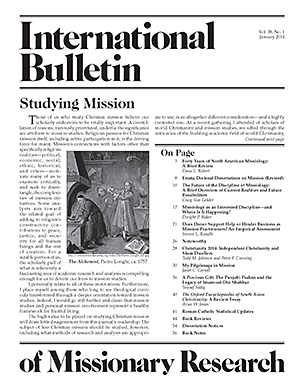
A new study produced by Dr Steve Rundle – author of Great Commission Companies – expands our understanding and provides fuel for further reflection. In his recently published article in the International Bulletin of Missionary Research Rundle examines the question, “Does Donor Support Help of Hinder Business as Mission Practitioners?”

There is no end of opinions about which model is best. Strong cases are made by the proponents on both sides. What has been lacking is strong empirical research to illuminate the discussion and aid in making the best strategic decisions. Most of the evidence is anecdotal with only a few studies to guide the discussion. Those familiar with the debate will know the arguments for both sides. I will not try to cover them here. My purpose here is to highlight the main findings of this new study and encourage the reader to explore the entire article for himself.

Some of the findings provided stronger evidence for conclusions suggested by earlier studies, while other finding were surprising.

“The evidence presented in this article suggests that, for a BAM business to have a meaningful impact in a community, it should be structured and incentivized much like a “regular” business, which includes (1) an independent board of directors and (2) salaries that are based, at least in part, on the company’s performance.”

The study focused on testing two economic hypotheses. The first was based on the assumption that BAMers who depend on their business for all their income will devote more time and energy to the business and will therefore generate more revenue. It is expressed:

“Hypothesis 1: Business-supported BAM practitioners will have a greater (more beneficial) economic impact on the local community than their donor-supported peers.”

The second hypothesis is based on the assumption that donor-supported BAMers will have less pressure to grow the business and thus will have more time to devote to producing spiritual fruit. It states:

“Hypothesis 2: Donor-supported BAM practitioners will be more effective in producing spiritual fruit than their business-supported peers.”

A questionnaire was given to about 200 self identified Business as Mission practitioners and their responses were analyzed on a number of dimensions.

“This study found that, compared with fully donor-supported BAM practitioners, those who are fully supported by their Business report significantly better results in the economic and social arenas, and are no less effective in producing spiritual results.” [emphasis is from Rundle]

As expected the first part of the finding supports hypothesis #1. Those more focused on developing the business grew their businesses more and produced more income. This not only helped the BAM person directly, but enabled them to have more impact on bringing social benefit to their community.

The second half of the finding was counter-intuitive and did not support hypothesis #2. No evidence was shown that those spending less time developing the business were more effective in producing spiritual fruit.

In the full article the author presents cautionary qualifications to how far the findings can be applied and issues that need further study. He concludes:

“One thing we can say with certainty is that the questions raised by the integration of business and missions will keep mission scholars busy for a long time!”

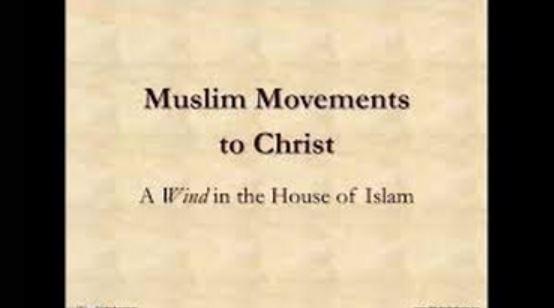
69 new Christ-movements among Muslims

http://globalopps.org/tmbriefs/msl.jpg

– Throughout history there have been 82 movements where Muslims in great numbers have come to Christ. 69 of them have started the past 20 years, says David Garrison.

A few years ago the well-known missions researcher was challenged to investigate more closely to what extent Muslims come to Christ today.

– There are many rumors and anecdotes about what is happening. Three years ago a foundation approached me to ask if I could find out what the reality is. So I began what I didn’t realize at the time would be a journey of a quarter-million miles throughout the Muslim world gathering information, says Garrison in an interview with BreakPoint. His research and the stories he has gathered are published in the newly released book named “A Wind in the House of Islam”.

In his research Garrison has defined “movement” as more than 1,000 Muslims from one particular people group being baptized within a two-decade period. Based on this definition he concludes that there in history have been a total of 82 movements where Muslims have come to Christ. 84 percent of those movements have happened within the last 20 years.

– This is historically unprecedented, it’s stunning to learn, says Garrison.

He confirms news shared by many others that a great number of Muslims are led to Christ through visions and dreams.– The stories I have been told are just remarkable, states the researcher. View video here.

They stole the chapel bell!

http://globalopps.org/tmbriefs/manos.jpg

If you noticed from  there was still a black bell made of bronze in the tower of the training center. It was stolen sometime in the night.

Read below for this year’s course students comments.

Here are comments from this years course at this location.

“If only I could have attended a course like this in the 60’s” – Benito Honka, retired missionary & self funded artist.

“One of the first things I processed was why did we not hear about this before? Also got the feeling that God is not finished with us yet and we can apply what we have learned. Appreciated your humble spirit and for sharing from your heart” – Woman from Poland

“I felt like I was under a giant dump truck of information being dumped on me until I could not see anything from underneath it. It will take me a long time to process what we have learned. The challenge will be to apply it to everything we do” – North American missionaries to Spain

“Appreciated hearing about your vulnerability as teachers, it really impressed me. Thank you for sharing about your failures as well as victories. I can surely put this teaching in my toolbox as I return to USA” – Missionary

“I have been awed with the potential of tentmaking” – Man from Germany – Future trainer

“I am dreaming that mission agencies would be open to tentmaking and helping them to prepare them for service. Also want to return to China as tentmakers” -Wife of above & future trainer.

You have been so inspirational and given us so much of yourselves and helped me to move forward with this teaching in our ministry. – American serving in Spain