Filling the Hole in Holistic Missions

http://globalopps.org/tmbriefs/tmbfeb.png

Holistic ministry is the great rallying cry in missions today—the whole church taking the whole gospel to the whole world. This is a powerful statement. It zeroes in on the three major components of holistic mission. First, Jesus has commanded the whole church, not just an elite few, to make disciples of all peoples. Second, he directed the church to declare the whole gospel—everything he commanded, not just salvation. So we must exhibit the gospel in all aspects of life—the physical, emotional, social, and economic, as well as the spiritual. And we must lead believers into obedience in all areas of life. Third, the church must take Jesus’ message to the whole world, to all people groups.

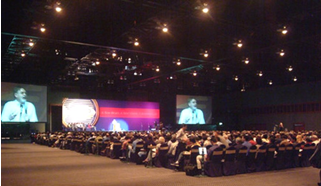
But how does the missions enterprise carry out this dictum? It runs programs—programs to feed, clothe, build, rescue, train, provide medical care, run micro-finance programs, do business development, evangelize, disciple, etc. I saw this over and over at Lausanne 04, the mission movement’s primary global consultation.

Programs provide very real help, but suffer limitations. The work often becomes a job and the people become projects. Have you ever seen a program treat people impersonally or unlovingly? We all have. Programs don’t love people; people do. Everything hangs on workers walking with God.

And who does this missions work? A small, select few, not “the whole church.” These are largely professional, paid workers, not everyday Christians who simply follow Jesus and love people. Ministry is their job. Many are deeply committed, caring Christians. But they cannot demonstrate everyday discipleship under all the pressures of everyday life simply because they don’t live there. They cannot demonstrate how to handle the tension between discipleship and working full-time or how to integrate work and witness or how to live for God in every aspect of life.

The “full-time” model also communicates a negative story. Only full-timers have the time, the training, and the special call to do much ministry. Everyday Christians cannot do that much. Worse, since doing ministry is the primary source of value, their work is devalued as “secular.” Most Christians have no idea of how their work is supposed to serve God. This implies that the gospel doesn’t really work in everyday life; it doesn’t speak to all of life. It only works for full-time Christians. This thinking has traded the whole gospel taken by the whole church for a shriveled gospel taken by the select few.

But, great news! The apostle Paul and his co-workers proved that the whole gospel works for the whole church in all of life. Paul integrated work and discipleship in all of life as an everyday Christian. He worked full-time to support himself while taking the gospel to the ancient world. So did his co-workers.*

So did real tentmakers throughout history and so they do today.

Christianity traveled through businessmen, soldiers, students, teachers, refugees, pilgrims, doctors, lawyers, prisoners, slaves and hostages, Christian lay people of all kinds: bearers of the Christian message as they traveled. So largely, expansion was not the work of pastors, but of Christian men and women in their ordinary routines of life.                           — David Wright (condensed)

Gladys Aylward won Chinese to Christ by how she served, loved, and shared the gospel in her inn. She won the respect of the local Mandarin so that he made her the area foot-inspector to enforce the new law ending foot-binding. This gave her great influence for good as well as opportunity for witness.

Today, tentmakers model the whole church taking the whole gospel to the whole world. “Rob” has been negotiating contracts with local headmen for a company in a Muslim country. His character, his work and his care for people including children led his driver to tell him one day that he had figured out that Rob was a “man of God.” Rob asked him to keep this quiet. But when they met with the next headman, he introduced Rob as “a man of God.” Surrounded by his entourage and local villagers, the head man told Rob, “Tell us a story about God.” Really frightened, he figured he might as well go for it. So beginning in Genesis, he told about God’s working in history and about Jesus. When he finished, the headman said, “Now that was a story! I want you to tell this to all my people whenever you come.” As a result, people began coming to Christ and churches have developed and spread throughout this unreached people group.

Biblical tentmaking makes it normative for all Christians to make disciples, live devout lives, serve God in all of life, and reach out to those different from themselves. Tentmakers fill a gaping hole in present day missions demonstrating the whole church taking the whole gospel to the whole world. Many thousands more are needed to rebuild this primary pattern in the church. It is hard to overstate the impact everyday Christians can have by becoming effective tentmakers.

*See 2 Th. 3:6-10 where Paul refers to Silvanus, Timothy and himself twelve times as “we,” “us,” and “our.”

Why believe in Business as Mission?

http://globalopps.org/tmbriefs/hands-2.png

The Business as Mission (BAM) movement has become a fast growing flower in God’s garden. But not all rapidly growing seedlings will last for a long time.
So what will happen to the Business as Mission companies? Will we still talk about BAM 50 years from now? Of course only God knows what the future will look like and his foolishness is wiser than the wisdom of the humans (1 Cor 1.) Still it is possible to say something about the strengths and weaknesses of the BAM-strategy.

BAM strengths

Let us look at the strengths first. Here are a number of reasons why Business as Mission is a very relevant strategy for bringing the gospel to the ends of the earth:

1. Business people are welcomed everywhere. 
Nearly all countries will give visas to clever business people who will contribute to building up their society. In several of the countries where the Gospel is least known, there is a great need for business entrepreneurs who can bring about the creation of new workplaces. According to estimates from the World Bank, 2.6 billion people today have to survive on less than $2 per day. 1.4 billion people have an income lower than $1.25 per day. Within the next 20 years, two billion people will be born in societies where there are few churches and few jobs. It was God’s intention that everyone should work. If we have no job to go to and our skills are not in demand in society, we will very easily lose our dignity. God rejoices when business people use their skills and help people to get their dignity back.

2. Business people are welcomed in all layers of society. 
A man who served as a missionary in an African country for more than a decade, decided to start an import-export business when he moved to a new place. Now he is testifying how all doors opened for him after he started his business.

3. God has always used business people to bring the gospel forward. 
The Bible tells us that all but the apostles had to leave Jerusalem due to the persecution after the killing of Stephen (Acts 7). Many of those who left were craftsmen and women. The book of Acts tells us that those who were scattered planted new churches in the places where they settled. Gary Goodhew, a retired Anglican bishop, has concluded that «in the earliest history of the Christian mission the saving news of Christ was often carried to new places by those who were seeking to do business.»

4. Business leaders are people of influence.
Some years ago a tentmaker went to Greenland to run a shipping business. The business soon became the biggest tax payer in the local community. Because of his contribution to the society, the tentmaker was able to connect on a personal level with the municipal leaders.

BAM challenges
There are also some common reasons why some Business as Mission companies fail.

1. The founders/leaders don’t know how to run a company.
Some Christians have seen the BAM-model as an entry strategy to countries that do not issue visas to missionaries. Without any business skills, the people involved try to set up a viable company. However, due to lack of knowledge on how to run a company, the business fails.

2. Stigma of business
Related to the first problem is the attitude that business work is not real work for God. Some people think that as soon as they’ve managed to register a business they can use as a visa platform, they’ll spend as little time as possible running the business, and as much time as possible on evangelism. Anyone thinking like this will probably not succeed in his or her business. The attitude will also often discredit the name of Jesus. When the authorities see that the persons involved are not doing the job they promised, they conclude that Christians are people who do not keep their word.

3. Hostile authorities are becoming more aware of the BAM model
It is not only the Christian business people who know about the BAM way of working. Authorities in countries that are hostile towards the Gospel also have up to date knowledge about BAM. In many places they keep track of what the business managers are doing. This causes problems both to the businesses and to the local believers who are getting involved.

Conclusion
The BAM companies come in all shapes and sizes. Within the BAM family you find everything from one person companies making very little money to multi-national businesses with profits of millions of dollars. Together the BAM companies form a colorful flower. Let’s pray for God to raise up good BAM leaders and models so this movement now and in the future will have maximum impact for God’s kingdom.

Tentmaker Development Worker’s Dilemma

http://globalopps.org/000.jpg

A tentmaker working for an international relief organization writes (us) about her frustration and pain as she struggles to deal with issues of poverty and justice while providing aid to people in the country where she is serving. How do you respond to the abject need? Does giving money to the beggar help meet his need, or just enable him to remain in a dependent state of poverty.

Welcome to the world of development and issues workers have agonized over for decades. Every thoughtful, caring development worker sooner or later in his career faces these issues.

Just having compassion is not enough. History is rife with stories of well-intentioned efforts to “fix” a problem by jumping in with western “can-do” spirit and changing things. The truth is there are no simple, one size fits all, solutions. Workers need to learn the culture and appropriate ways to live out their faith in it.

Thoughtful people in recipient countries are beginning to recognize that simply giving away stuff does not bring about lasting change. Two years ago a conference of African leaders begged Bono (See the “Africans to Bono”) and well meaning groups like his to stop giving Africa money and material aid. They requested instead assistance in developing skills and systems to help take care of themselves.

A work team from North America came to “help” construct a school for the children in a poor rural community. They had grandiose plans for how quickly, with their expertise, they could build a school for the community. They were very upset when told they could not bring their power tools and finish the building in a week. Nor would they take their picture in front of the new school before leaving. It was a blow to their egos.

Rather, they would work along-side the villagers using the hand-tools available in the community. Concrete would be mixed with a shovel and block cut with a machete, instead of the power tools they were accustomed to using. The school would not be completed while they were there so that the villagers would finish it after they left. The community would know that they had done the project themselves and would be able to do it again when necessary. The work team came to help and share of themselves with the village, not to do for the village.

As they worked along with the parents and took breaks to play with the children new relationships were formed. When these accomplished craftsmen left, their project was not yet finished. But there was a special link with the people of the community and tears of sadness at their departure. They came to build a school and instead built bonds of love into the community.

Fundamental change has to take place internally if we are to see lasting results. People have to take ownership of their problems. There must be a change in worldview or mindset. This kind of change takes time and personal relationship. These deeper transformations will lead to changes in the internal social structures and result in real change.

While not written specifically for development workers, LifeWork: A Biblical Theology for what You Do Every Day, discusses God’s plan for followers of Christ to live out their faith in everything they do. When Christ’s followers live out their faith, the transformation the world needs will follow – at home or abroad.

Will the US keep up with the rest of the world?

http://globalopps.org/tmbriefs/Steinar.jpg

A focused group of 10 students showed up when Global Opportunities re-launched the organization’s tentmaking course in Pasadena in October. Nevertheless, the US can be left behind as the worldwide tentmaking train is gaining speed and bringing the gospel to the ends of the earth.

The US has been a driving force in the worldwide mission movement. In the same way, Global Opportunities has beena pioneer in developing modern tentmaking. Hundreds of overseas workplace witnesses have received their training through GO’s courses. But nine years into the new millennium, the American tentmaking train has to gain new speed if the US wants to maintain a leading role in what is happening.

In collaboration with its European partner, Tent, GO is now running annual tentmaking courses on three continents.  The training that has been developed by the GO-Tent alliance is also used in other countries. On the African continent it is estimated that 1000 professionals will take the course in 2009. The courses in the US are outnumbered by similar events in Canada, Mali, Norway and Uganda. One thing that is admirable with Americans is their competitive attitude. Americans want to be world leaders and in many areas they are. Hopefully the same attitude can bring the US back as one of the major locomotives in the worldwide movement of tentmakers. The next chance for Americans to jump on the train and get the basic training is the GO Equipped TENTmaking course in Fort Myers, Florida in February of next year.

Nike won the world as a leading manufacturer for sports shoes and clothing. If you want to contribute in winning the world for Jesus as an international workplace witness, the course in Florida is a good starting point. Why not follow Nike’s slogan, book your tickets to Florida immediately and “Just do it”? You can register for the course here.

   Steinar Opheim
   Director
   TENT Norway